


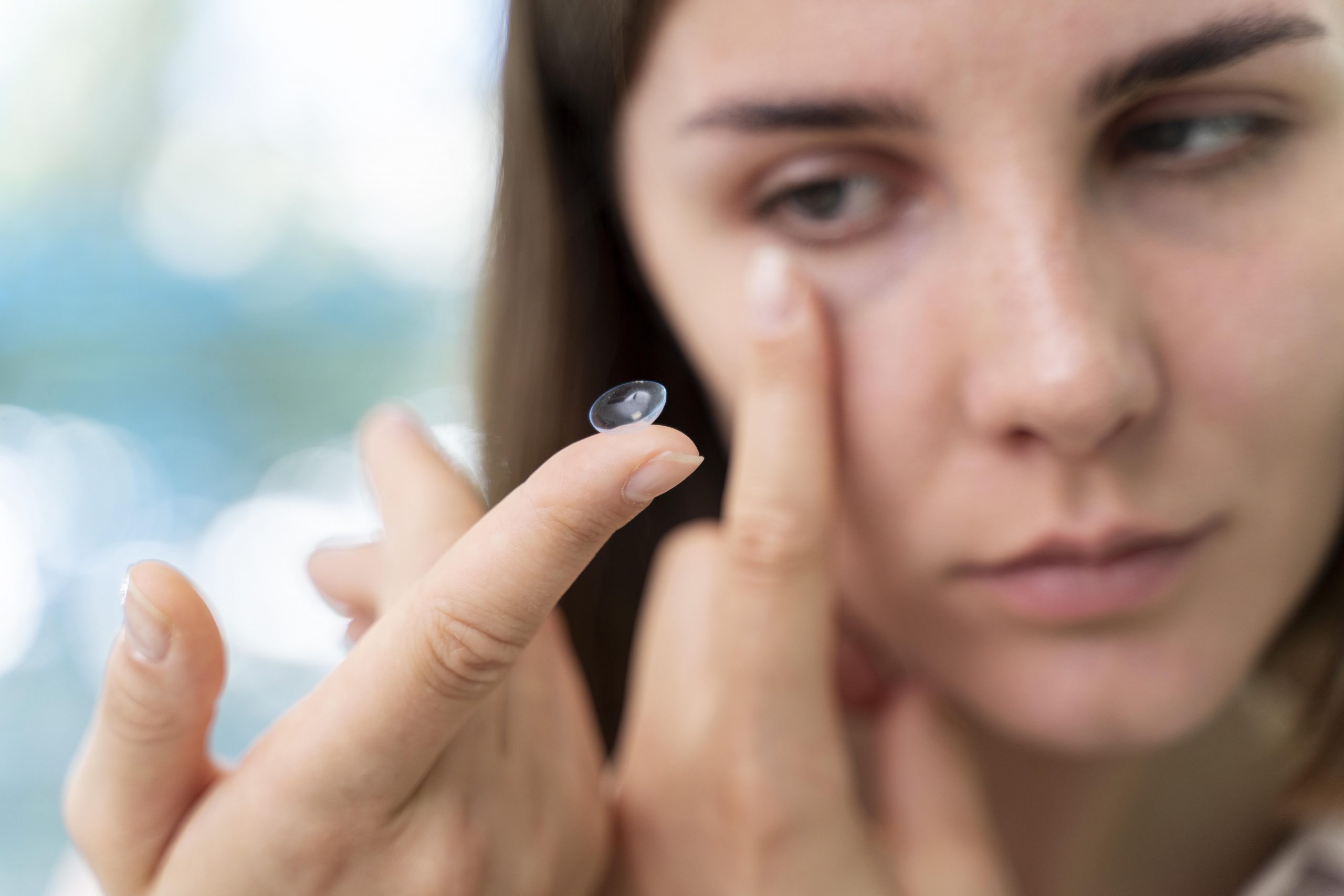
How to choose the right contact lenses
In recent years , contact lenses have made great strides and now offer interesting solutions. For people with vision problems, contact lenses remain an effective and almost invisible tool. The lenses fit the cornea, the front of the eye, to correct vision problems, such as nearsightedness, farsightedness and astigmatism. You can also wear contact lenses if you have presbyopia and need bifocals. To choose the most suitable type of lenses, it is advisable to talk to your ophthalmologist.
What factors to consider before choosing lenses?
The first step is to talk to your optometrist about some things like:
- lens material. You will need to decide between rigid contact lenses – also known as gas permeable (RGP) rigid lenses – and soft contact lenses. The latter are by far the most common choice because they are comfortable to wear practically immediately, are easy to remove and are ideal for when you are traveling.
- During the time you can use them. Soft contact lenses are usually disposable. The most common types of contact lenses are those for daily use, which can be worn during the day, removed and thrown away after each daily use. The other option is soft contact lenses that are suitable for prolonged wear.
- Choice of a solution suitable for indoor/outdoor use. If you’re bothered by glare but don’t want to wear sunglasses, photochromic contact lenses are the ideal choice. They are not necessarily suitable for everyone. They are lenses that darken in the sun, behaving just like transitions glasses. When exposed to ultraviolet light, in fact, the photochromic molecules of which they are composed react by changing their molecular structure.
- The ophthalmologist’s prescription. Aside from practical factors, the most suitable type of contact lenses will naturally be the one that will solve your specific vision problems. If you have astigmatism, you will likely be prescribed toric lenses. If you normally wear multifocal glasses, you will be prescribed multifocal contact lenses. If you are simply nearsighted, you will be prescribed spherical lenses.
Before proceeding with the final choice of contact lenses, you need to consider a few factors:
- vision problems;
- lifestyle;
- How often you want to change lenses.
The various types of contact lenses
There are various types of contact lenses on the market. Let’s see together what they are and their characteristics.
Soft contact lenses
They consist of a special type of plastic material, such as silicone-hydrogel or hydrogel, mixed with water in a percentage ranging from 55% to 78%. The water contained allows oxygen to pass through the lens to the cornea. This makes contact lenses more comfortable, reduces dry eyes and helps keep the cornea healthy. If it doesn’t get enough oxygen, it can swell, become cloudy, and cause blurred vision or other more serious problems.
Many soft contact lenses are single-use, so you can throw them away after using them for a short time.
Having a pair of fresh soft contact lenses means you have less chance of infection.
Although soft contact lenses are commonly disposable, whether they are daily lenses, lenses that are replaced every two weeks or monthly lenses, there are some soft lenses that are not. These are usually custom contact lenses.
Compared to gas-permeable rigid lenses, soft lenses are better worn when first inserted. In addition, many soft contact lenses offer some protection from UV rays.
The material of soft contact lenses can absorb particles, chemicals, bacteria, and mold more easily than rigid and gas-permeable lenses. In addition, they absorb all kinds of substances that can irritate the eyes: smoke and sprays in the air, lotion or soap on the hands.
Soft contact lenses are also more fragile. They can tear or tear more easily than rigid or gas-permeable lenses.
Colored and soft contact lenses
Tinted lenses have the advantage of being easily spotted in the lens case, but their color is not enough to change the color of the eyes.
Opaque colored contact lenses, on the other hand, enhance the natural color of the iris and change the color of the eyes. Among the most popular colors are blue, amethyst, purple and green.
Rigid gas-permeable lenses
As the name suggests, they are stiffer than soft contact lenses. They are made up of silicone-containing compounds that allow oxygen to pass through the lens material to the cornea of the eye.
What factors do you choose contact lenses?
If you want the sharpest vision possible, gas-permeable contact lenses are undoubtedly the best choice. Because they have a hard, smooth surface, they typically have better optical qualities than soft contact lenses.
If you suffer from astigmatism, gas-permeable contact lenses or special soft toric contact lenses are more suitable. These lenses have special features to correct blurry vision caused by unequal corneal curvature (the most common type of astigmatism).
If comfort is the main requirement, conventional soft contact lenses are usually the best choice. Most people claim that soft lenses are comfortable as soon as they are worn.
If you don’t want to worry about lens care and disinfectant solutions, daily disposable contact lenses are probably the best choice. These soft lenses are worn only once and then thrown away.
If you are over 40 years old and suffer from presbyopia, bifocal or multifocal contact lenses may be the best lenses.
If you are comfortable with glasses and only want to wear contact lenses occasionally for sports or for some special occasion, soft contact lenses are usually the best choice.
Most people wear soft contact lenses comfortably, even if they do so sporadically. Gas-permeable lenses should be worn every day. If you want vision as sharp as possible, but can’t comfortably wear gas permeable lenses, perhaps hybrid contact lenses can meet your needs.