


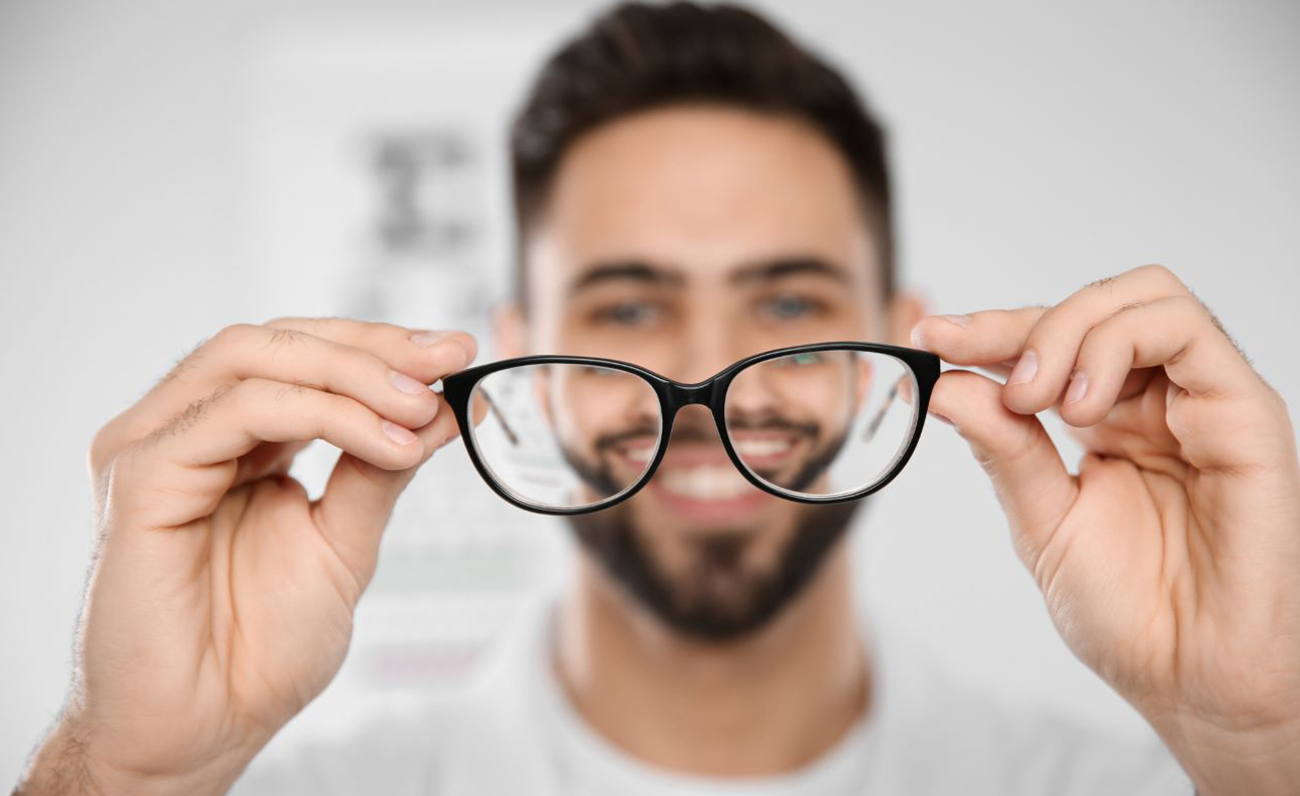
Vision check: how often is it necessary?
Sight accounts for 90% of our sensory experience. The Italian Ophthalmological Society emphasizes not only the importance of our visual system, but also the need to take care of it adequately and consistently.
Often we do not realize that, between UV rays, pollen and pollution, our eyes are subjected to continuous stress. Not to mention the defects and pathologies that can affect them, from the most common such as myopia to the most complex such as glaucoma.
The eye examination, in addition to determining the diopters, can also be used to diagnose any eye diseases.
Importance of periodic vision check
Periodic vision checks are important for the following reasons:
- “Seeing well” also means a better quality of life. Seeing perfectly allows us to learn, work and fully interact with the world around us. It is not certain that the eyes have something wrong only when they hurt.
- An eye check can immediately reveal the first signs of silent eye conditions, such as glaucoma, age-related macular degeneration or cataracts. It is important to keep in mind that the sooner the problem is resolved, the better the chances of successful treatment.
- Eye exams can also detect signs of other health conditions, such as diabetes, high blood pressure, and cardiovascular disease.
How often should you have an eye check?
Eye examinations should be carried out at least every one or two years. They become necessary especially in the case of the over 40s because it is after this age that some serious eye diseases can arise, such as glaucoma.
The frequency of eye examinations depends on several factors. The first is age. According to scientists, eyes develop quickly after birth. For this reason , newborns’ eyes are checked both at birth and at six months.
Adult eyes, on the other hand, do not need to be monitored as often because they stop growing around the age of 20–21.
As we age, eyes continue to change, especially after 40. By this age, our eyes begin to lose elasticity and focusing becomes less effective. This disorder is known as presbyopia.
For some people, the loss of near vision occurs in a more marked form, for others it can be quite mild.
Importance of eye control according to age
During a complete visual exam, the eye doctor can observe and assess the health and condition of the blood vessels in the retina. They are a valid indicator of the health of blood vessels throughout the body. Conditions such as diabetes, high blood pressure, and hypercholesterolemia are visible from changes in the appearance of the blood flow of the retina and blood vessels.
Annual eye exams are especially important for those with diabetes who may be at risk for the condition due to obesity, family predisposition, or other reasons.
In its early stages, diabetic eye disease has no visible symptoms; only a complete eye exam can detect signs of the disease and allow treatment to begin early enough to prevent vision loss.
Under the age of 40, the ideal is to undergo an eye examination every two years, regardless of the presence or absence of visual disorders such as myopia or hyperopia. After the age of 40, the eye exam should be repeated every year.
Children should repeat the eye examination annually.
Eye examination in case of previous diseases
Another important factor in determining the frequency of eye examinations is the presence of previous conditions such as diabetes or glaucoma. This is a valid precaution both in the event that the patient suffers from it and in the case of cases in the family.
If you have suffered from eye problems or diseases in the past, if you are at risk of developing ophthalmological diseases or if there are cases in the family, you must book an eye examination every year.
Vision check: does it consist of a coast?
During the visit to the clinic, the ophthalmologist checks the state of health of the eyes through some painless and non-invasive tests.
In addition to an accurate history of the patient and his family, the doctor will measure the eye pressure, which allows to identify any increase, an important risk factor for glaucoma.
Through the physical examination, the doctor examines the alignment of the eyes, the state of the eyelids, the possible presence of macroscopic changes related to orbital and lacrimal pathologies, the statics and pupillary mobility.
With the slit lamp (or biomicroscopy), all the structures of the eye are checked, such as the conjunctiva, sclera, cornea, anterior chamber, iris and crystalline lens.
By means of additional lenses, it also allows the examination of the iridocorneal angle, the vitreous body, the retina and the head of the optic nerve. It is a fundamental examination, which allows many eye diseases to be identified or suspected.
The examination through autorefractometry allows us to have an estimate of the patient’s error and refractive error (myopia, hyperopia, astigmatism).
The classic eye test (visual acuity) allows the ability to focus and distinguish objects in both eyes to be measured, both naturally and with the possible help of corrective lenses.